
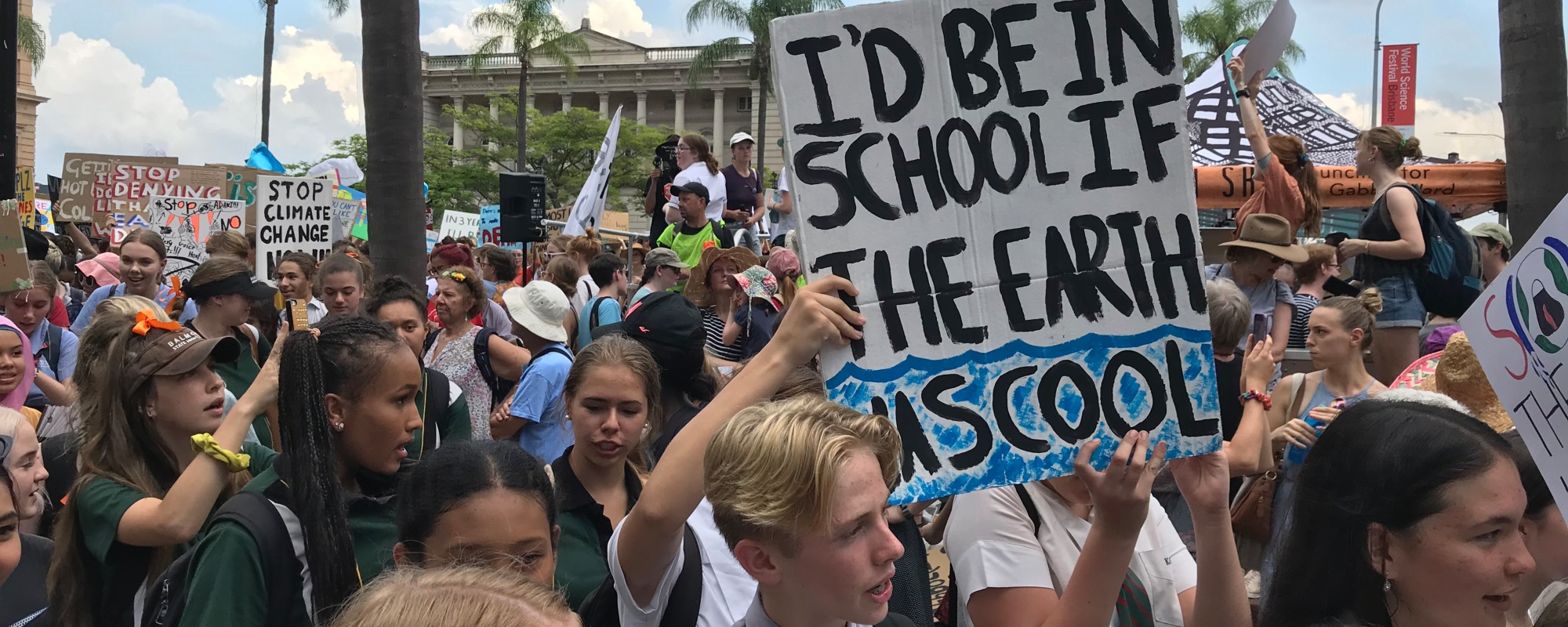

Strike for Climate Change is a campaign that has spread worldwide. Swedish school student Greta Thunberg led the first strike outside the Swedish parliament building in 2018. Last Friday, thousands of Australian school students, united by their concern for the planet, participated in their own School Strike for Climate Action.
The student-led strike’s goal was to send a message to politicians that current environmental policies are not doing enough towards alleviating climate change. Students want politicians to take their futures seriously and treat climate change for what it is — a crisis.
The students did not come to the strike empty handed. They demanded politicians stop the Adani coalmine, the mining of new coal or gas, and to move towards having 100% renewable energy by 2030. They also requested that politicians host climate change forums for students to attend before the next federal election, and that politicians pose with school students and a Stop Adani sign to show their opposition. Students worry, as Climate change is one of the biggest problems facing the world and it isn’t being addressed quickly enough.

Amnesty International attended the demonstration to show their support for the students who took the time to challenge politicians to take climate action. Amnesty also supports climate change through their petitions and advocacy for the human rights of environmentalists and conservationists from around the world, who are vilified for raising their voices.
Politicians often treat climate change as an ecological problem however, without adequately addressing the issue, many key international human rights will be affected. Some of these include the right to life, right to adequate food, right to water, right to health, human security, and the right of indigenous peoples. Increased temperatures will cause deaths, limit the amount of accessible water, and reduce food production.
When our oceans rise in temperature, they undergo thermal expansion and glaciers melt, raising water levels. This means that many coastal and lower lying countries will be submerged causing widespread migration. This is particularly difficult for indigenous communities that have a strong connection to the land.

Amnesty International will continue to assist in raising awareness for climate change as its reduction mitigates the infringement it has on human rights. We need to think ahead and make sure the choices being made by our governments are helping us move towards a better future.
Sources
 amnesty.law.blog